It takes months, sometimes years, for an artist to find the time and resources to put together a show. There are countless steps involved, and a million things to be done- images to return to, work to shortlist, money to find, and the uncertainty of letting something deeply personal leave the studio and enter the world.
In India, there is another thing on the list, we have become far too accustomed to: courage. Even the decision to show what you have seen can demand it.
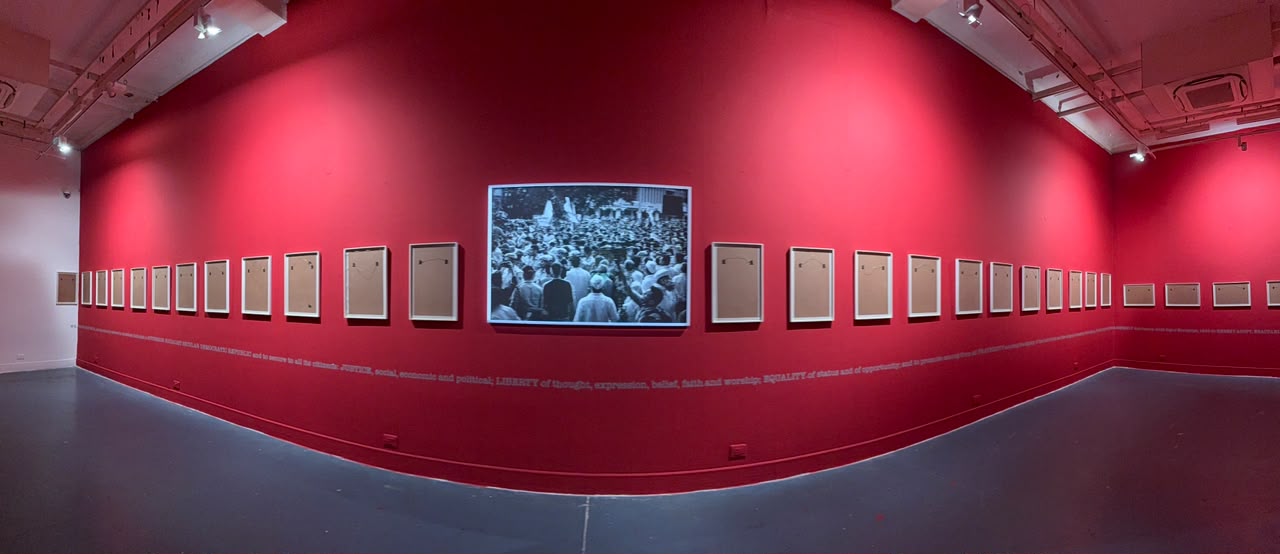
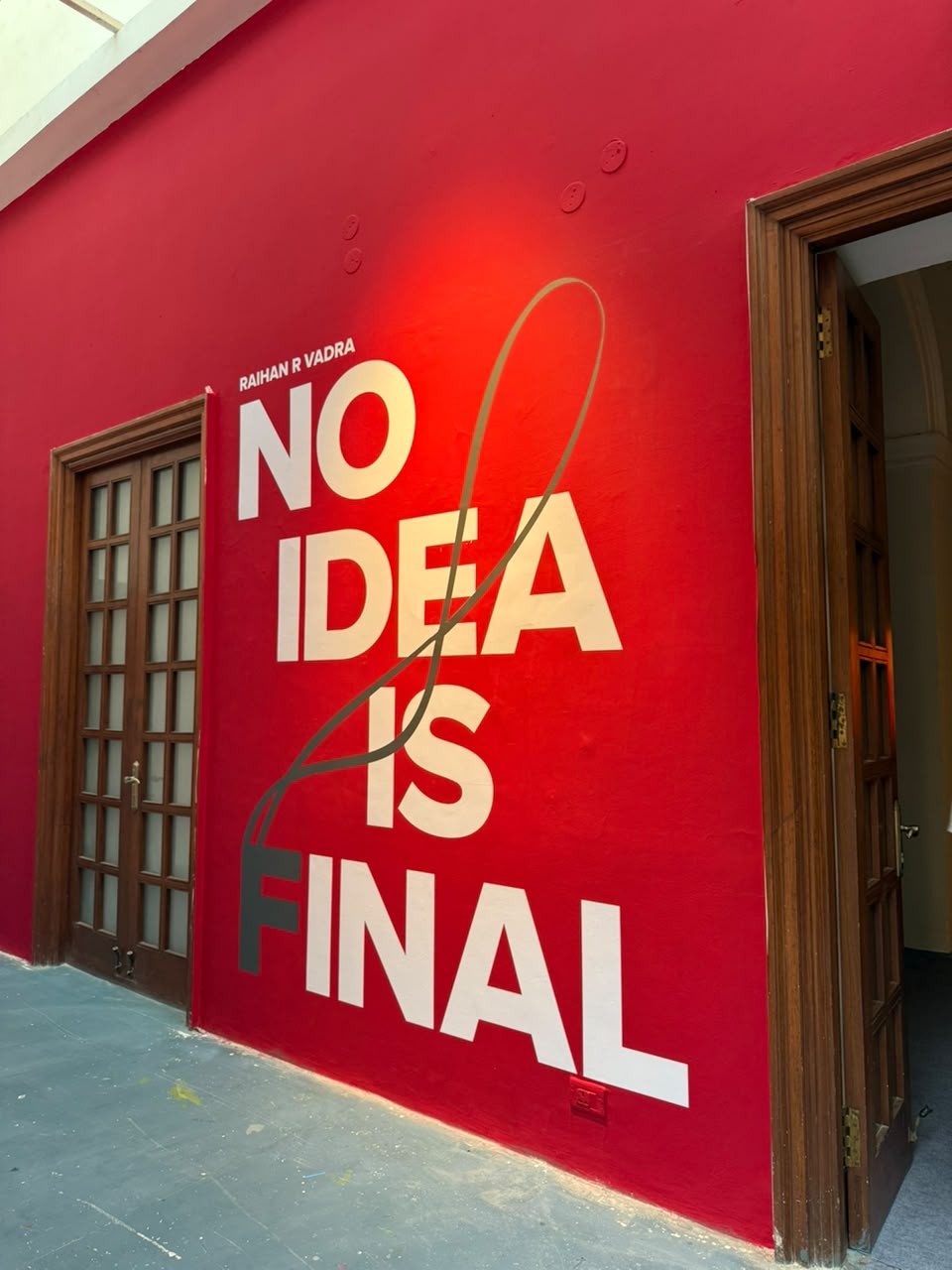
At Bikaner House in Delhi on the evening of 21 October, that demand became painfully visible. Raihan Vadra’s latest solo exhibition, No Idea Is Final, previewed with more than 70 photographs of recent protests missing from its walls. The show went ahead. Red walls, exposed nails and lights directed at the spaces where photographs should have been became part of what we encountered.
Vadra told NDTV that he had been asked to remove the photographs or face cancellation. According to his account, a written request cited the venue’s booking policy, while officials had also objected to the timing and context of the images. He said “I had shared the exhibition layout much in advance.” But Bikaner House refuses to speak on the incident.
The request, Vadra said, extended to two photographs featuring the Indian flag. “I will not take down a picture of the Indian flag,” he wrote in a social media post. One of those images had nevertheless been removed while he was away from the venue.
Bikaner House is administered under the Rajasthan government. Its booking policy currently available online prohibits “political content” in artworks and provides for removal and cancellation without refund. The precise terms communicated for this exhibition, and how the venue applied them, still require a public explanation. But the published prohibition deserves scrutiny in its own right.
What does a cultural institution mean when it says art cannot be political? A photograph of people protesting is political. So, potentially, is a portrait of someone whose existence troubles the social order. Work about land, labour, caste or gender can become political the moment it asks who holds power. The breadth of the word gives whoever administers the rule enormous discretion over what remains on the wall.
Putting that discretion into a booking policy does not settle the question of whether it belongs there. A public arts venue should be able to explain why a particular work must be excluded, and why exclusion is necessary. The possibility of political discomfort is a deeply inadequate answer. We should not accept political silence as the price of being allowed to exhibit.
Vadra’s family background will inevitably shape how this episode is discussed. He is the son of Congress leader Priyanka Gandhi Vadra, and that connection brings visibility and access unavailable to most young artists. It also makes it convenient for the centre-supreme to reduce the exhibition to another political dispute. We should resist that reduction. His work deserves scrutiny as work; his family name cannot be a sufficient reason to restrict it.
The same standard must apply to an artist whose politics we dislike.
(coughs Aditya Dhar the little mind behind Dhurandhar??? Vivek Agnihotri for creating villains out of the common man in Kashmir Files???)
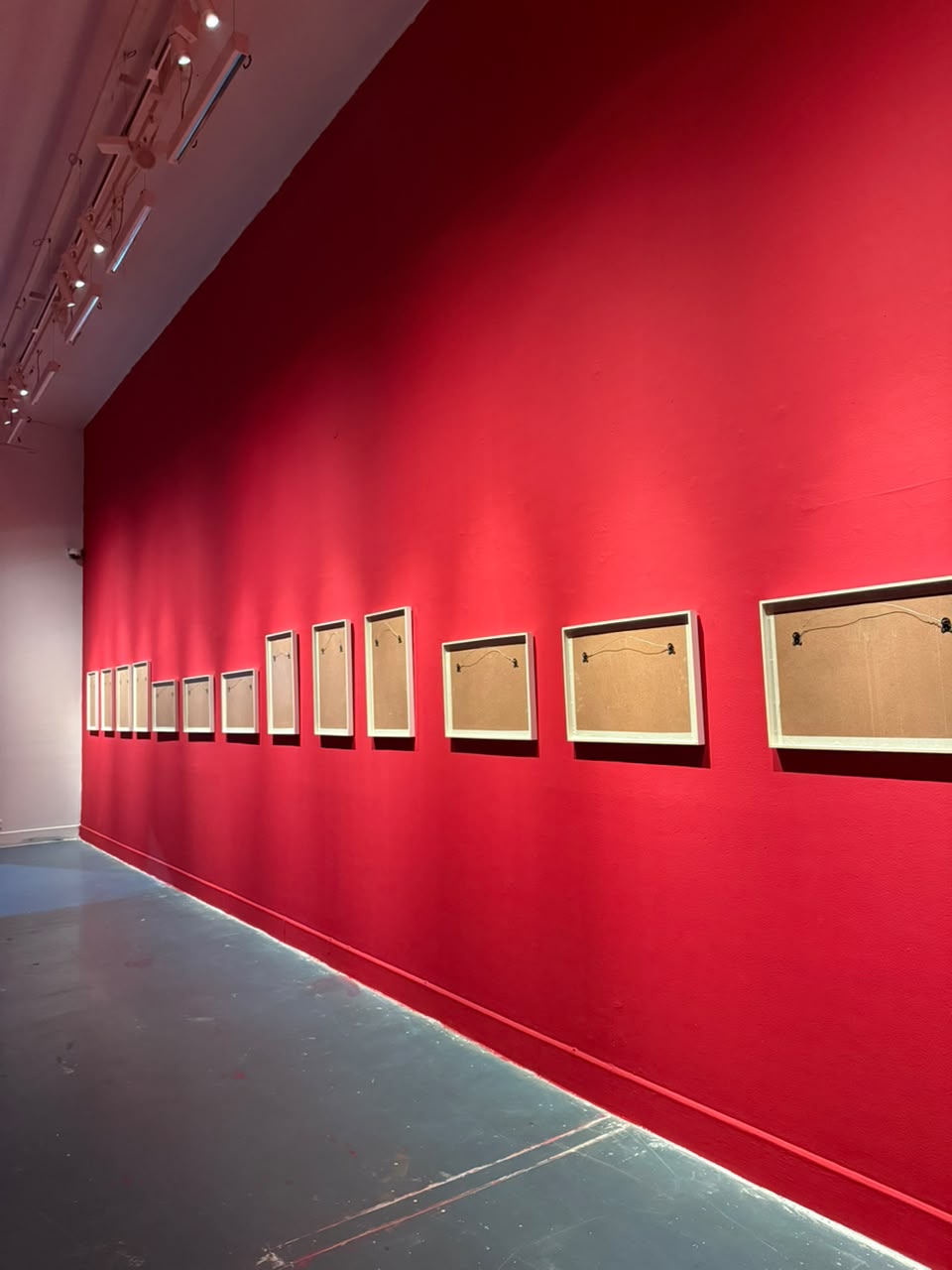
There is also something troubling about having to defend these photographs by insisting that they carried no political message. Every individual is allowed to have a point of view or at least it was allowed till 2014. Choosing where to stand, what to frame and whose experience to bring into view are meaningful decisions. We should be able to discuss those decisions, disagree with them, even find the work impactful or not. Removal lets an administrative decision pre-empt the audience’s encounter with the exhibition as the artist birthed it.
History gives us ample reason to be suspicious of a demand for political harmlessness.
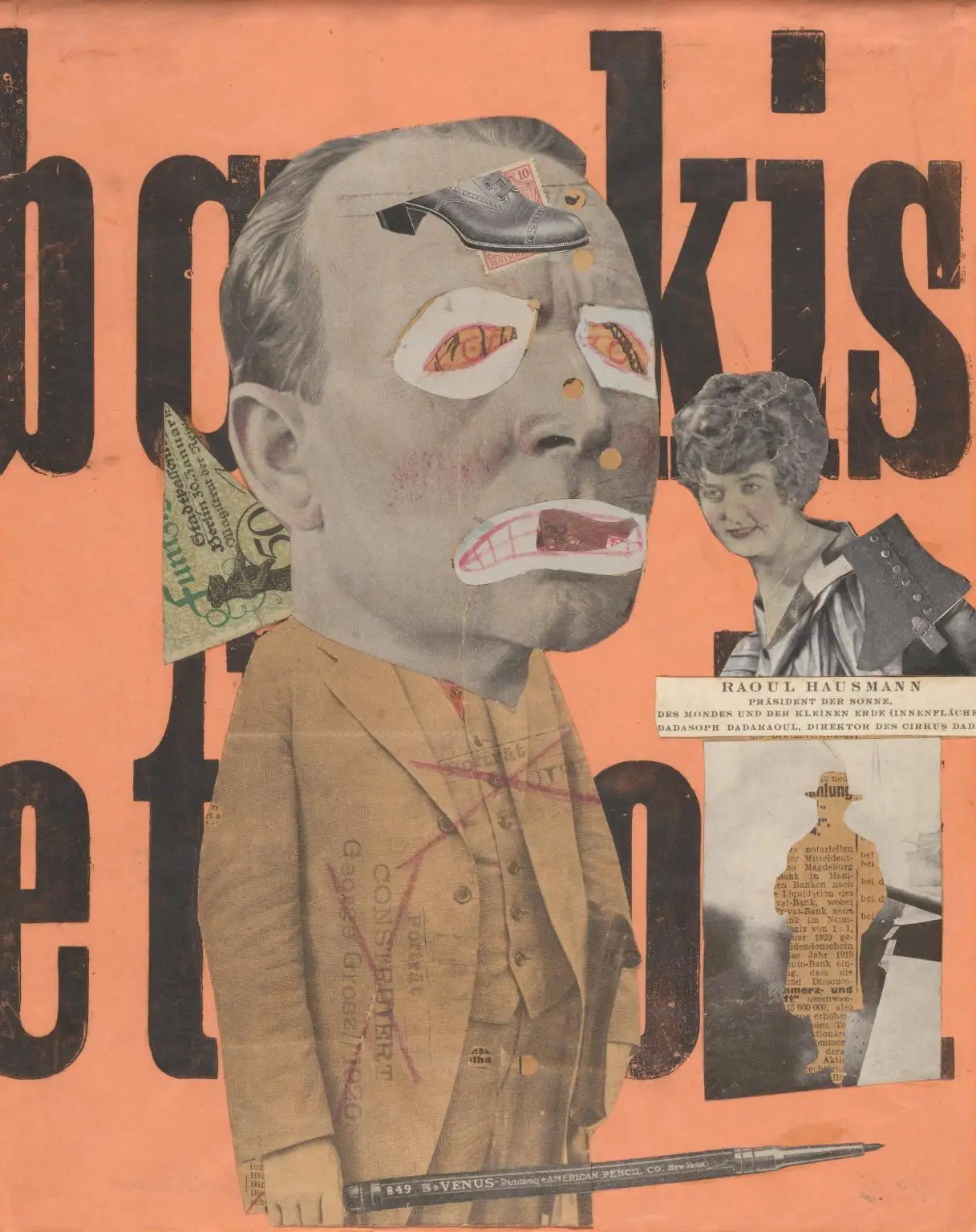
During the First World War, Dada’s experiments with collage, performance and absurdity challenged the conventions of a society its artists believed had made catastrophe possible. Hans Arp recalled: “Revolted by the butchery of the 1914 World War, we in Zurich devoted ourselves to the arts.” Their revolt changed the language of art itself, opening possibilities far beyond the movement’s immediate moment.
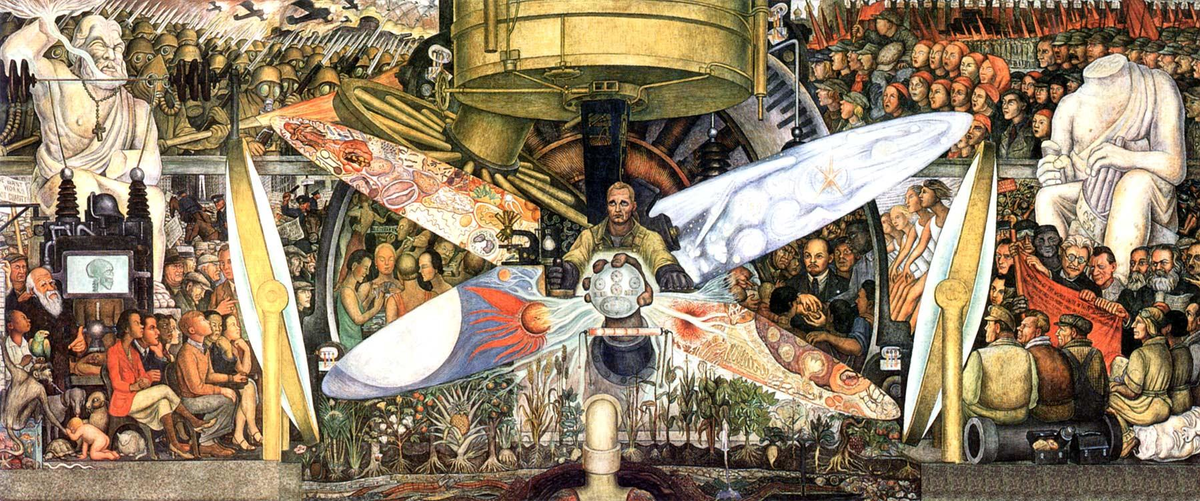
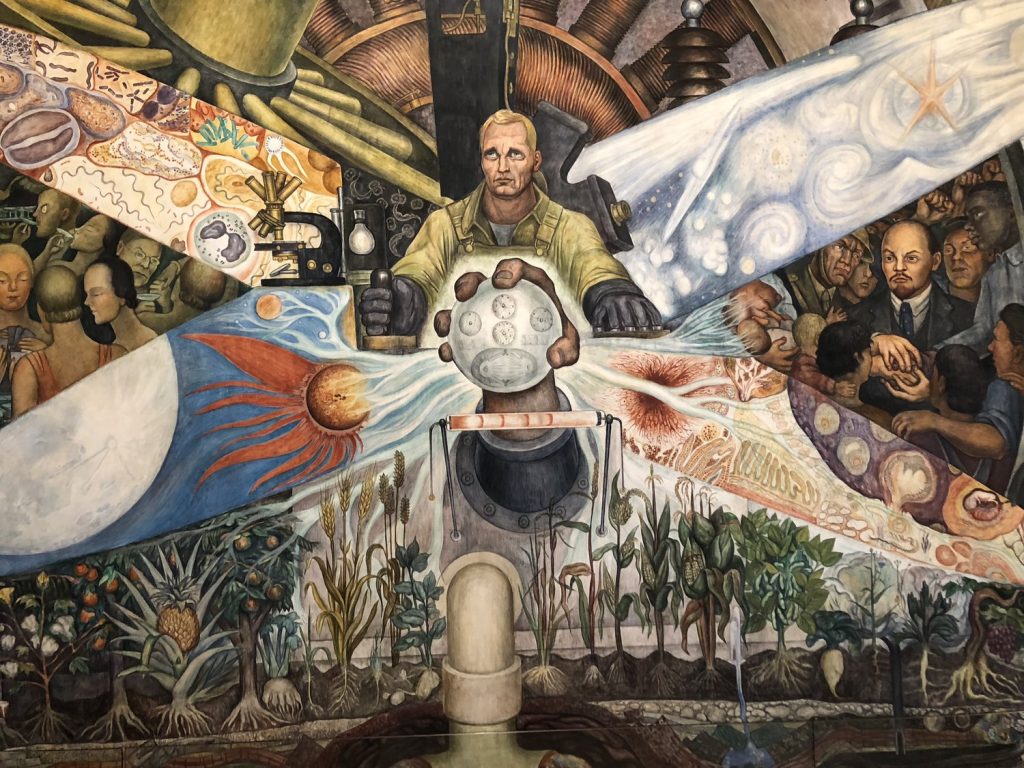
After the Mexican Revolution, a programme of public commissions helped Mexican muralism bring accounts of collective life and political struggle onto the walls of major buildings. Diego Rivera’s career reveals both the possibilities of that support and its limits. In 1933, Nelson Rockefeller asked him to remove Lenin’s portrait from Man at the Crossroads (below) at Rockefeller Center in New York. Rivera refused. The mural was covered and, in February 1934, destroyed.
Recalling his reply years later, Rivera wrote that “rather than mutilate the conception, I should prefer the physical destruction of the conception in its entirety”. In 1934, Rivera made a revised version of the same mural in Mexico City, Man, Controller of the Universe. This was censorship by a private patron. The conflict nonetheless exposes a question familiar to any artist dependent on someone else’s space: how far does control of the wall extend into control of the work?
In Chile, under Augusto Pinochet’s dictatorship, the Colectivo de Acciones de Arte, or CADA, took experimental art into public life. Its members included the artist Lotty Rosenfeld and the writers Diamela Eltit and Raúl Zurita. Their No + action, begun in 1983, offered an unfinished phrase: “No more”. Others could complete it with what they refused to accept, including violence and censorship. The work created room for people to participate in a refusal collectively at scale.
These histories belong to different political circumstances. They show, in different ways, how artists have helped people challenge the terms on which they are expected to live. Artists have worked alongside wider movements, giving dissent images, language and forms of participation. A culture that welcomes the resulting masterpieces should recognise how much confrontation went into making them.
India has its own history of suppressing the artist as witness. Chittprosad’s Hungry Bengal, published in 1943, combined drawings and reportage from the Bengal famine. British authorities seized and destroyed copies. His work made the suffering of people he encountered available for others to see and reckon with. The attempt to suppress that record is a reminder of how threatening the act of looking closely can become to those responsible for the conditions being recorded.
The pressures have continued in independent India, through different institutions and methods. M. F. Husain left the country in 2006 following threats to his life and spent his final years abroad. His standing as a major figure in Indian modernism offered no guarantee of safety. In 2007, the art student S. Chandramohan was arrested on obscenity allegations after a controversy over works exhibited at Maharaja Sayajirao University in Baroda. The vulnerability extended from an internationally celebrated painter to an artist yet to begin his career.
(below: photo of letter posted on the empty walls of Bikaner House, at Vadra’s latest solo.)

The courts have also defended artistic freedom. In its 2008 judgment concerning Husain, the Delhi High Court stated: “The right to dissent is the hallmark of a democracy.” It also asked what happened to artists who could not afford the costs of litigation. That question remains most urgent. The practical ability to defend expression can depend on money and support long before a court reaches its conclusion.
For an artist with little financial security, a cancelled exhibition can mean lost savings, unpaid production bills and the disappearance of an opportunity that took years to secure. A threat need not result in a formal ban to affect the next decision. It can be enough to make someone leave a photograph out, soften a title or abandon a subject before anybody asks them to.
That is the danger beyond the walls of this exhibition. What happens to the work that never reaches a gallery because its maker has already learnt the likely cost? We can count the photographs taken down at Bikaner House. We cannot so easily count the ideas that fear may persuade other artists to give up.
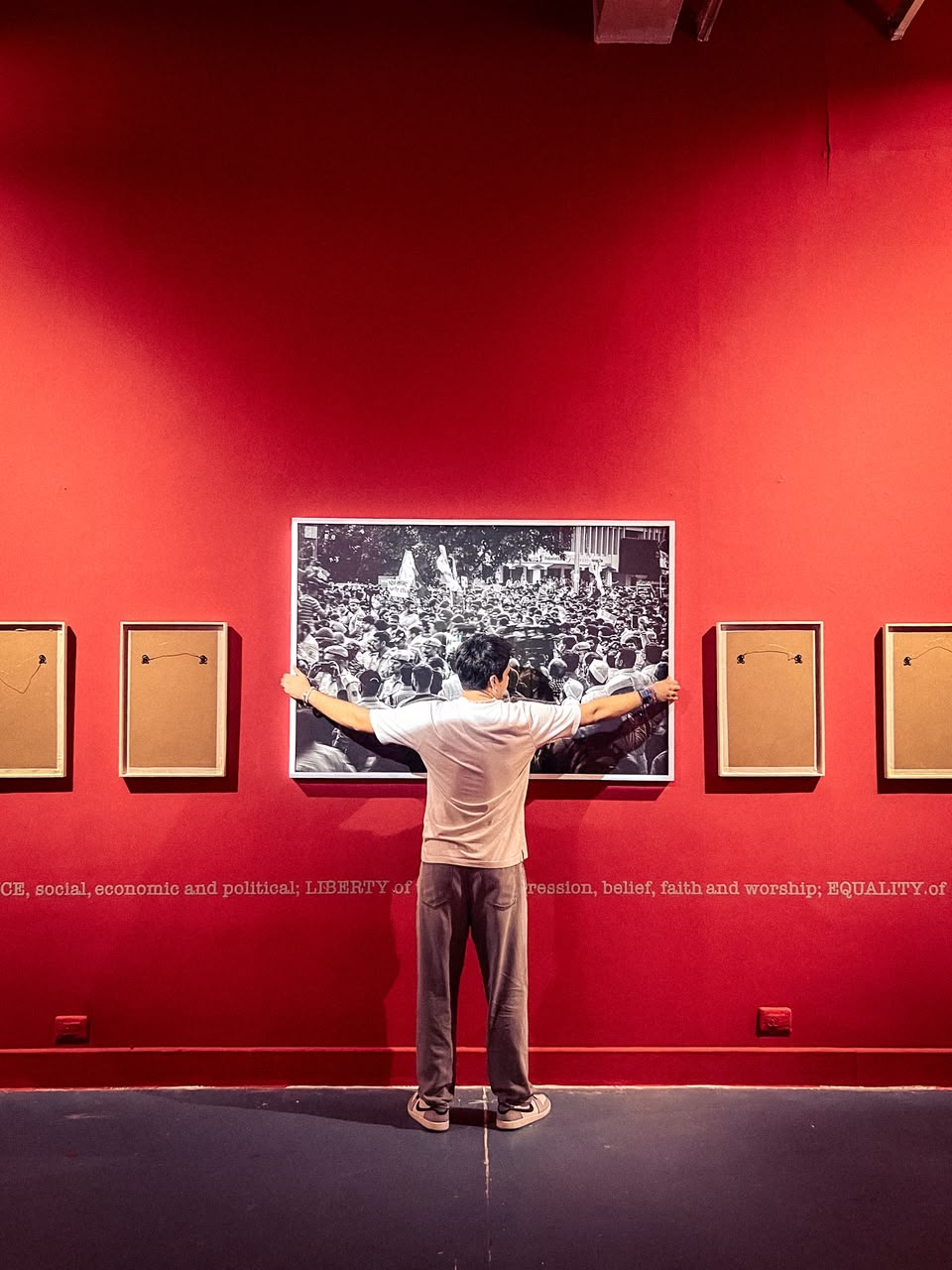
Vadra’s decision to continue with the exhibition matters because it allowed the absence to remain visible. Visitors could still find the removed photographs in a catalogue. But the lights directed at empty spaces made the intervention difficult to ignore. The exhibition now carried a record of what had been done to it.
I admire that decision. Although, we should be careful about making endurance the test of a true artist. An artist who withdraws because they fear violence, cannot afford a legal fight or need to protect the people working with them has not failed their art, the system has.
A community should make it possible to take a stand without requiring every individual to bear the consequences alone.
As an editor and an occasional curator, I find that responsibility difficult to separate from our own work. We help decide which artists are seen and which conversations receive attention. If we celebrate courage in exhibition texts, we must be prepared to support it when a venue becomes uncomfortable. That means asking for reasons, reporting removals, helping artists find spaces to show the work, and sustaining attention after the immediate controversy passes.
Public institutions, meanwhile, owe artists clear decisions that can be questioned. A ban on political content deserves open debate. So does the use of a cancellation threat after the work has been made, installed and prepared for an audience. The people must always have a say in such decisions.
What we witnessed at Bikaner House will stay with us beyond the opening night. The artist found the time, done the work and brought it into the world. The audience had come to look. Between them stood an authority deciding that certain images of could not be displayed on those walls. After all the order came in from the top.
No artist should have to be extraordinary simply to be allowed to show their work.
If courage has become a routine condition of putting a photograph on a wall, it is time to sound the alarm. And it is time for change, both inward and out.
– Shrey Sethi, Editor.